Top Message
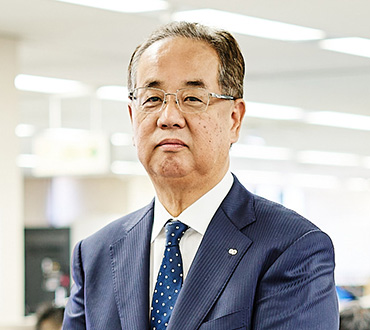
We would like to express our deep gratitude to shareholders for your continued support of the Aoyama Trading Group.
In the current fiscal year, the outlook for the Japanese economy remains uncertain owing to factors such as rising prices caused by soaring global resource prices, etc., and the weakening of the yen following interest rate hikes in Europe and the Americas aimed at curbing inflation. However, consumer spending and other factors have recovered moderately, partly as a result of the normalization of social and economic activities as an increasing number of people have adapted to life with COVID-19, as well as the effects of various government policies. In this environment, both sales and profits exceeded those of the previous year, mainly thanks to improvements in the performance of the Business Wear Business, as well as the Total Repair Service Business, and the Franchisee Business, all performed well.
In this business environment, under “Aoyama Reborn 2023”, our Medium-term Management Plan with the fiscal year ending March 31, 2024 as the final year, the Group will make concerted efforts to realize the three aspects in the management vision which are “Innovation and Challenge of Business Wear Business,” “Promote Group Management,” and “Sustainability Initiatives.” Under the plan, we will also work to achieve the KPIs and the ESG targets in order to contribute to the development of a sustainable society through our business activities.
General Outline
Business results for the current period
In our group, sales were higher than in the previous year, due in part to the relaxation of regulations that lead to restrictions on activities and outings throughout the period.
(¥ Millions)
Net Sales |
Operating income or loss(▲) |
|||
|---|---|---|---|---|
Segment |
Current term |
Previous term |
Current term |
Previous term |
Business wear businness |
126,379 |
113,278 |
3,156 |
678 |
Credit card business |
5,013 |
4,841 |
2,205 |
1,989 |
Printing and media business |
12,299 |
12,159 |
514 |
▲337 |
Sundry sales busineaa |
15,731 |
16,039 |
233 |
488 |
Total repair service business |
12,382 |
10,161 |
293 |
▲519 |
Franchisee Business |
13,157 |
10,960 |
872 |
211 |
Others |
1,654 |
1,642 |
▲316 |
▲230 |
Adjustments |
▲3,111 |
▲3,120 |
150 |
▲97 |
Total |
183,506 |
165,961 |
7,110 |
2,181 |
Review of Operations
Business Wear Business
Aoyama Trading Co., Ltd., Blue Rivers Co., Ltd., MDS Co., Ltd., Eisho Co., Ltd., FUKURYO Co., Ltd. and Aoyama Suits (Shanghai) Co., Ltd., Melbo Men's Wear, Inc.
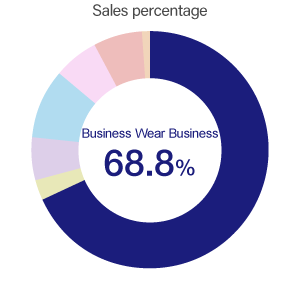
Net sales of the business were 126,379 million yen or 111.6 % of the previous fiscal year and segment income (operating income) was 3,156 million yen or 465.3 % of the previous fiscal year.
In the Business Wear Business of Aoyama Trading Co., Ltd., which is the core segment of our business, there was a recovery in replacement demand, which had been flat for about two years due to the COVID-19 pandemic and in demand for special occasion wear due to the relaxation of restrictions on activities, and sales of men’s suits, our mainstay, and formal wear were higher than in the previous fiscal year. As a result, sales at existing stores in the Business Wear Business were 111.7% of what they were in the previous fiscal year.
The number of men’s suits sold was 1,214 thousand suits or 99.9% of the previous fiscal year and average sales unit price was 28,794 yen or 107.6% of the previous fiscal year.
From the current fiscal year, the Company acquired all the issued shares of S Squared, Inc. and made it a wholly owned subsidiary. As a result, three companies were included in the scope of consolidation: S Squared, Inc. the holding company, and its subsidiaries Melbo Men’s Wear Inc., which runs order-made suit brand “azabu tailor,” and MELBO CLOTHING MANUFACTURING, INC.
In addition, S Squared, Inc. was eliminated through an absorption-type merger with Melbo Men’s Wear Inc. as the surviving company.
Credit Card Business
Aoyama Capital Co., Ltd.
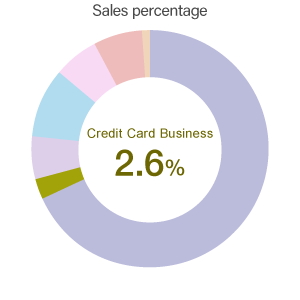
In the Credit Card Business, net sales were 5,013 million yen or 103.6% of the level in the previous year and segment income (operating income) was 2,205 million yen or 110.9% of the previous fiscal year. This was the result of an increase in shopping and cashing transactions due to the increase in opportunities to go out.
Funds were acquired through borrowing from the parent company, Aoyama Trading Co., Ltd., and through the issuance of corporate bonds.
Number of effective members are 4.11 million as end of February 2023.
Printing and Media Business
ASCON Co., Ltd.
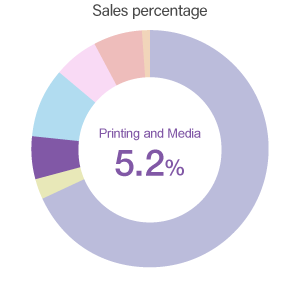
In the Printing and Media Business, net sales were 12,299 million yen or 101.2% of the previous fiscal year and segment income (operating income) was 514 million yen compared to segment loss (operating loss) of 337 million yen in the previous fiscal year, mainly due to a recovery in sales related to flyers, direct mail, and digital sales promotions, as well as new device-related sales such as cab signage terminals digital signage used inside taxi.
Sundry Sales Business
Seigo Co., Ltd.
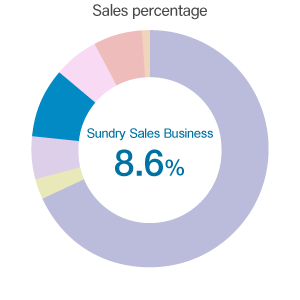
In the Sundry Sales Business, net sales were 15,731 million yen or 98.1% of the previous fiscal year and segment income (operating income) was 233 million yen or 47.8% of the previous fiscal year due to a decrease in stay-at-home demand resulting from the relaxation of restrictions on activities, in addition to higher costs, including utilities and cashless settlement fees.
As of the end of February 2023, there were 113 stores.
Total Repair Service Business
Minit Asia Pacific Co., Ltd.
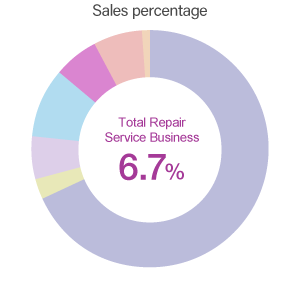
In the Total Repair Service Business, net sales were 12,382 million yen or 121.9% of the previous fiscal year and segment income (operating income) was 293 million yen compared to segment loss (operating loss) of 519 million yen in the previous fiscal year, mainly due to the recovery of sales in the Japanese business due to the resumed movement of people and service price revisions, and further growth in sales in the overseas business, which had already recovered.
Franchisee Business
glob Co., Ltd.
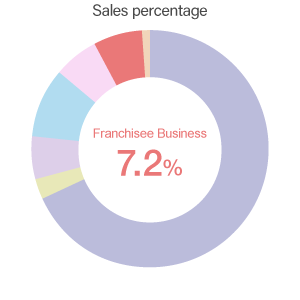
In the Franchisee Business, net sales were 13,157 million yen or 120.0% of the previous fiscal year and segment income (operating income) was 872 million yen or 413.7% of the previous fiscal year, mainly due to recovery in sales to pre-pandemic levels (the fiscal year ended March 2020) in the Food Service Business with the relaxation of restrictions on activities and a significant expansion in the Reuse Business driven by the pandemic.
Others
WTW Corporation, Customlife Co., Ltd.,
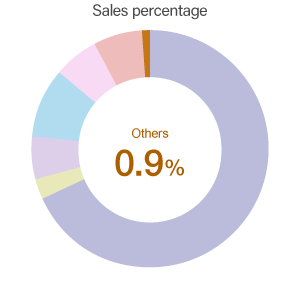
In Other Business, net sales were 1,654 million yen or 100.7% of the previous fiscal year and segment loss (operating loss) was 316 million yen (segment loss (operating loss) of 230 million yen in the previous fiscal year).
As of the end of March 2023, there were 7 WTW stores.
March 31, 2023
President